ADA Portable Toilet Requirements Explained
Accessibility requirements for portable toilets come from federal guidance, applied specifically to public events. Here’s what the actual requirements cover.
The 5 Percent Rule
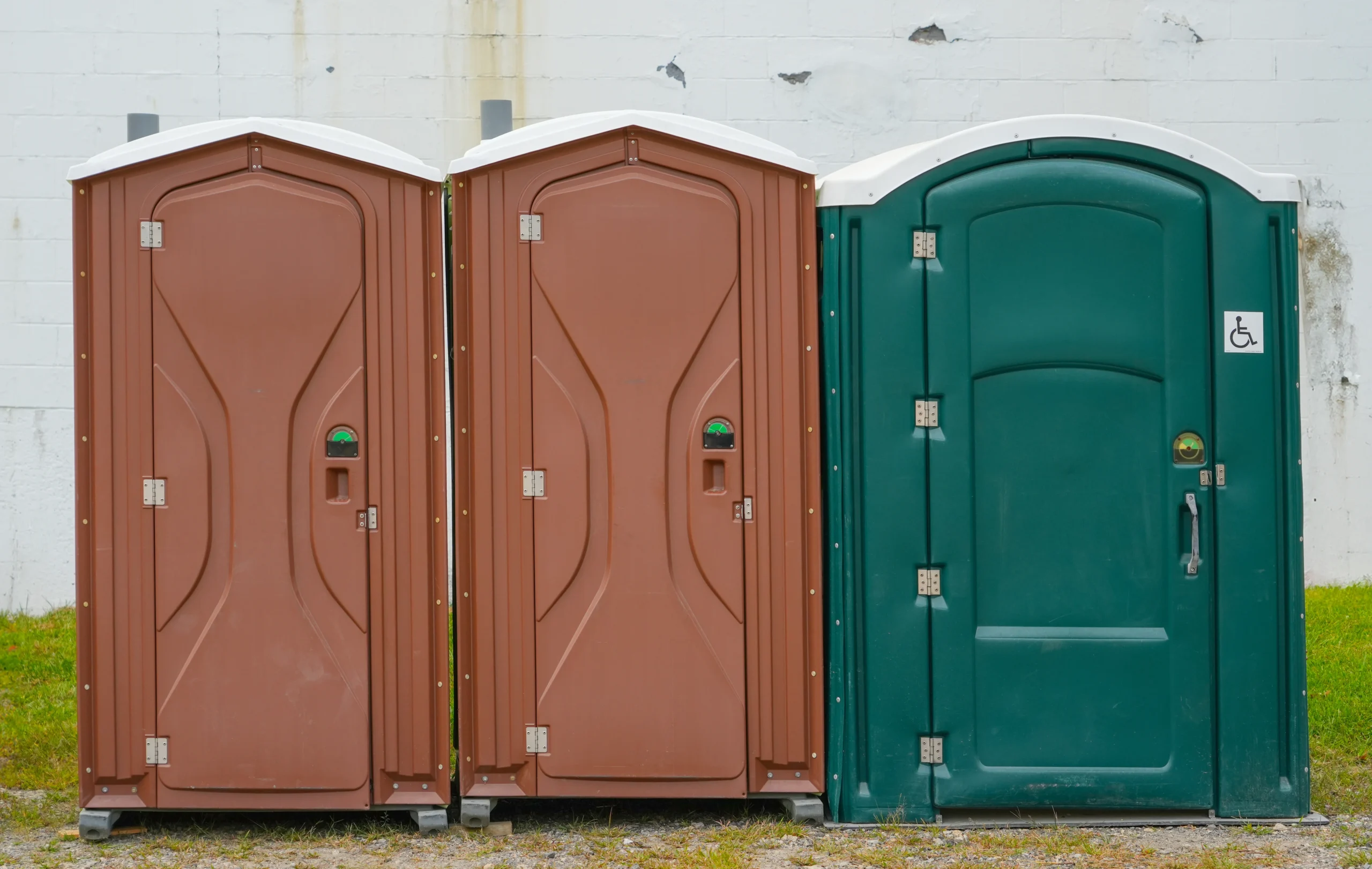
At least 5 percent of portable toilets at a public event need to be ADA accessible, with a minimum of one accessible unit per cluster of units, based on U.S. Access Board guidance.
Where does the 5 percent requirement come from?
It comes from U.S. Access Board guidance on accessible facilities at public events, applied to portable toilet clusters the same way it applies to other public facilities.
Door Width and Ramp Requirements
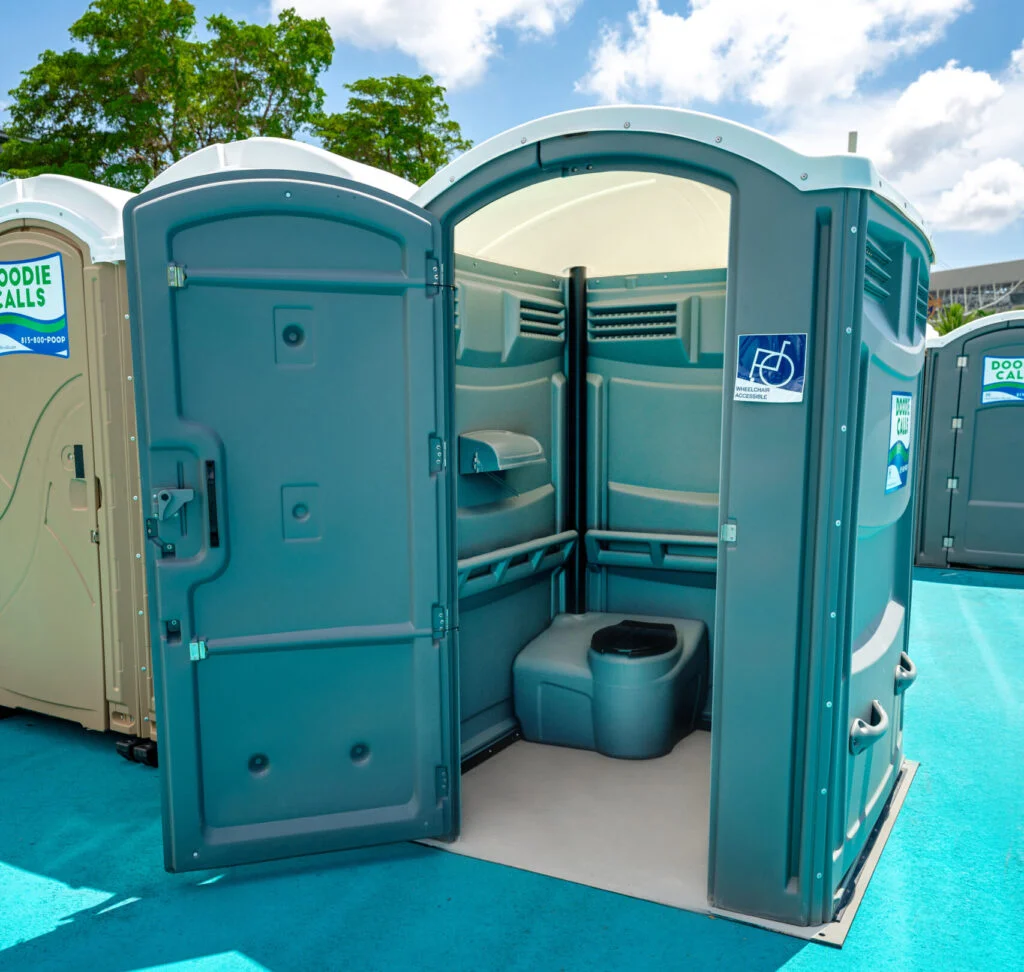
An ADA accessible unit needs a door opening of at least 32 inches, along with a ramp instead of a step, to allow wheelchair entry.
How wide does the door need to be on an accessible unit?
At least 32 inches, which is the federal minimum for wheelchair accessible door openings.
Why are accessible units so much bigger than standard units?
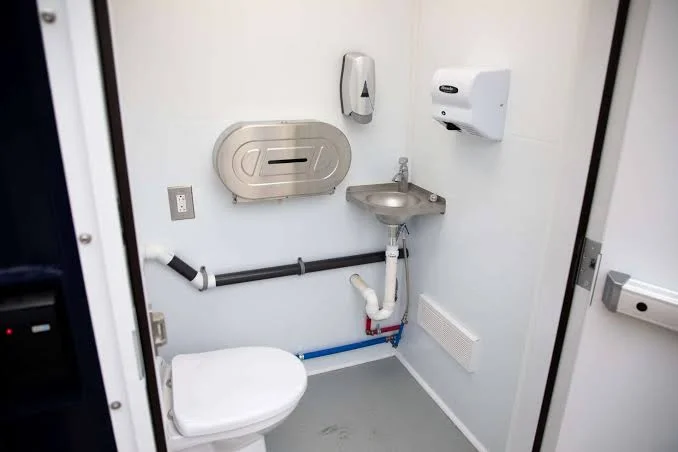
The extra footprint is needed to give a wheelchair user enough room to turn around inside the unit, which standard units aren’t built to accommodate.
Are grab bars a standard feature on every accessible unit?
Yes, grab bars on both sides are a standard built in feature of ADA accessible units.
Does a private backyard party need to follow the 5 percent rule?
No, the rule applies to public events. A private gathering on private property isn’t bound by this specific requirement, though a host can still request an accessible unit if needed.
Interior Turning Space
Accessible units need enough interior floor space for a wheelchair to enter and turn around before exiting, which is why these units are noticeably larger than a standard unit.
Grab Bars and Seat Height
Accessible units include grab bars mounted on both sides of the toilet, along with a seat set at a different height than a standard unit to assist with transfers.
Where the Requirement Applies
The 5 percent rule applies specifically to public events, not private gatherings on private property. Construction sites follow separate general workplace sanitation rules instead.
Frequently Asked Questions
Request a free quote for ADA accessible porta potty rental and confirm the right unit count for your event.